

Most people spend more time choosing a sofa than a bed. That is a strange priority when you consider that the bed is where you spend roughly a third of your life. Get it right, and you barely notice it, in the best possible way. Get it wrong, and it has a way of making itself known, whether through poor sleep, a room that never quite feels balanced, or storage problems that creep up on you six months after moving in.
This guide is for anyone who wants to make that decision properly, whether you are starting from scratch in a new home or finally replacing something that has served its time.
Why the Bed Is the Most Important Furniture Decision in Your Bedroom
There is a reason interior designers always start with the bed when planning a bedroom. Everything else, the wardrobes, the side tables, the lighting, and the rug, gets arranged around it. The bed determines how the room flows, how much usable space it feels like, and what kind of atmosphere it creates.
Beyond the design side of things, the right bed supports your body through every night of sleep you get in it. That is not a small thing. A frame that wobbles, a base that offers no real support, or a size that leaves you feeling cramped, these things accumulate over time in ways that affect your energy, your mood, and genuinely your quality of life. A bed is one of those purchases where the cost per day of use, spread over several years, makes quality worth prioritising from the start.
If you are ready to explore what is available before diving into the details, you can browse beds and get a feel for the range of styles, sizes, and materials on offer.

Working Out the Right Size for Your Space
Bed size is where a lot of people go wrong, usually by either overestimating how much space they have or underestimating how much space they need. The honest answer is that you should measure your room before you do anything else. Not a rough estimate, an actual measurement, with the tape on the floor and clearance on all sides accounted for.
Single Bed and Twin Bed
A single bed or twin bed makes the most sense in rooms where floor space genuinely is limited, such as a child's bedroom, a compact guest room, or a secondary room that doubles as a workspace during the day. There is nothing limiting about a single bed in the right context. It keeps things open, easy to move around, and unfussy in a way that suits certain rooms very well.
Double Bed
A double bed sits in the middle ground that many people find genuinely useful. It gives a solo sleeper room to stretch without dominating the room, and it works for couples in apartments where a larger bed would simply eat too much of the available space. Before committing, it is worth looking at the double bed size specifications against your room layout. A difference of thirty centimeters in either direction can change how a room feels entirely.
Queen-size bed
The queen-size bed has become the default choice in most modern homes, and it deserves that position. It is generous enough for two people to sleep comfortably through the night without feeling like a compromise, and proportionate enough to sit well in a standard bedroom without making it feel crowded. For many households, it strikes the right balance across all considerations.
King-Size Bed
A king-size bed is a different proposition. It is not just larger; it changes the feel of a room in a way that the other sizes do not. In a room with enough space to support it, a king-size bed brings a genuine sense of ease and luxury that is hard to replicate through any other single design decision. In a room that cannot quite accommodate it properly, it tends to create more problems than it solves. Be honest about your square footage before going down this route.

The Bed Frame Matters More Than Most People Expect
The frame is not a secondary consideration. It is, in many ways, the design decision, the element that most directly communicates the character of the room and the quality of the overall setup.
Low-profile frames with straight, clean lines tend to suit contemporary interiors. They keep the room feeling open and uncluttered, which is especially valuable in bedrooms that are not particularly large. Taller frames, particularly those with a substantial headboard, bring weight and presence to a room in a way that can feel very considered and intentional when done well. A single bed frame keeps things compact and clean. A double bed frame typically allows for more design detail, and the choice between them comes down to practical fit as much as personal preference.
The structural quality of the frame matters as much as its appearance. A frame that moves, creaks, or loses rigidity over time is a daily frustration that affects your sleep, whether you consciously register it or not. This is an area where investing in well-made construction pays dividends over the years of use.
Storage, Worth Thinking About Before You Buy
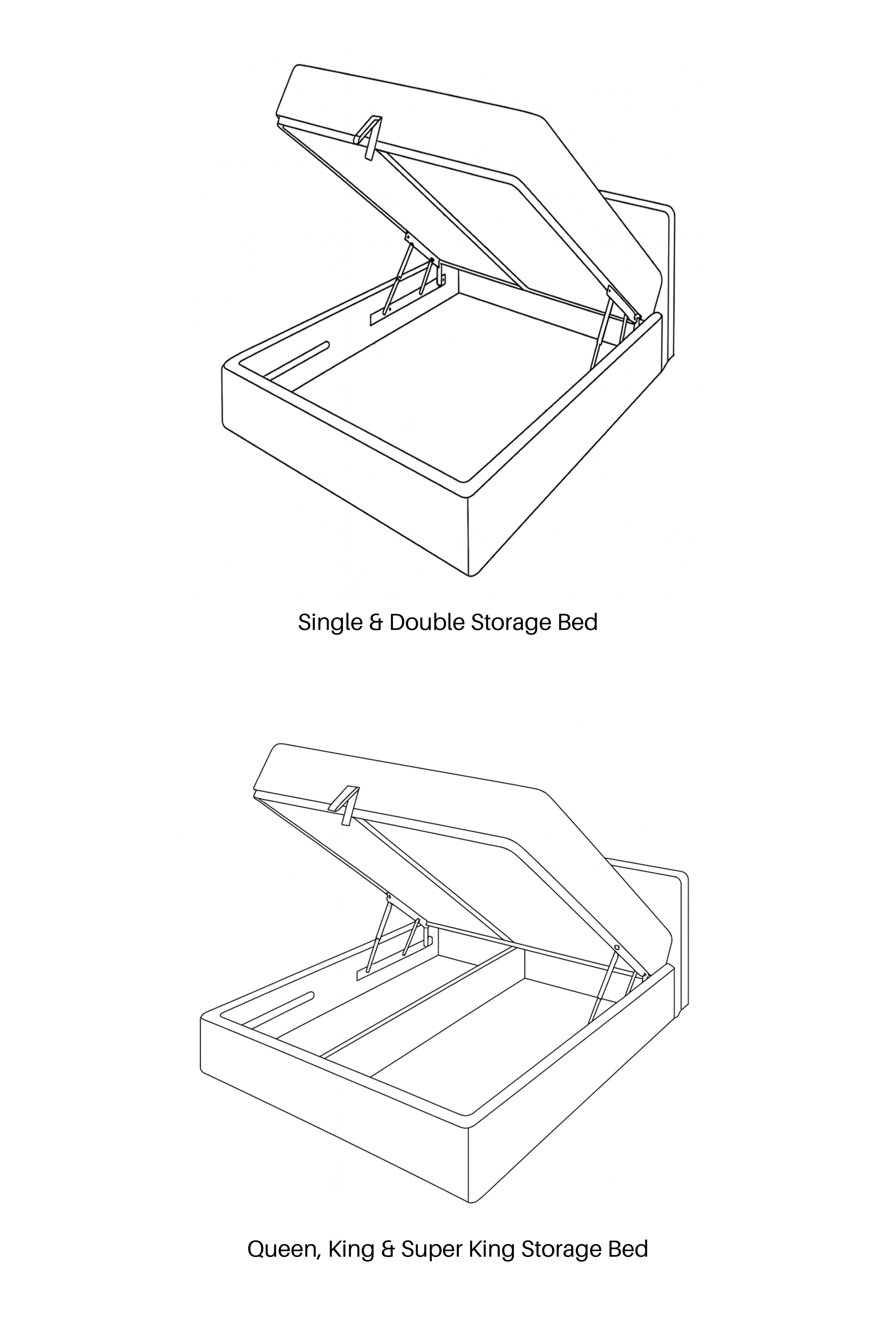
If your bedroom storage is already doing a reasonable job, a standard bed may be perfectly sufficient. If, like most people, you are always looking for more places to put things, a bed with storage is one of the most practical upgrades you can make. The space under a bed is either wasted or used well. There is rarely a middle ground.
Drawer bases offer easy, everyday access and are ideal for items you reach for regularly. Hydraulic lift bases open the entire under-bed area and work better for seasonal or infrequently used storage. Neither is objectively better. It comes down to how you actually use the space and what you are likely to be storing there.
Choosing a Material That Will Last
This is an area where the temptation to cut corners tends to produce the most regret. The material of your bed frame affects how it ages, how it holds up to daily use, and whether it continues to look good years after you bought it.
Wooden Beds
Wooden beds, and hardwood in particular, have held their place as the most trusted option in bedroom furniture for good reason. The material has a natural depth and warmth that photographs rarely do full justice to. It wears well, ages well, and tends to look better in a room over time rather than worse. Solid hardwood also brings a structural robustness that composite alternatives simply do not match over the long term.
Metal and Upholstered Frames
Metal frames are a strong choice for anyone drawn to a more minimal or industrial aesthetic. They are lighter, generally easier to maintain, and work well in rooms with a deliberately pared-back design. Upholstered frames, particularly those with padded headboards, introduce a softness and texture to the bedroom that works especially well in spaces designed primarily for comfort and winding down. Some of the most well-resolved bedroom designs deliberately combine materials, pairing a hardwood base with a fabric headboard, for instance, to achieve a result that feels both warm and considered.
What Works in Dubai Homes Specifically
Bedroom design in Dubai has its own sensibility, shaped by the way people live here. It combines high standards for finish and quality, a preference for spaces that feel calm and ordered, and the practical reality of apartment living where storage and proportion genuinely matter.
Neutral palettes dominate, and for good reason, they create the sense of stillness that bedrooms in a busy city particularly benefit from. Clean-lined frames are consistently popular, as is built-in storage, which makes a meaningful difference in homes where every square meter has to work properly. High-quality wooden beds feature prominently across a wide range of interior styles here, from the more classic to the distinctly contemporary, because the material translates well across both and holds its quality in a way that suits long-term ownership.
Styling the Bed Once You Have It
A well-made bed in a well-chosen frame does most of the work on its own. Styling is about completing the picture rather than compensating for it.
Start with bedding that sits within your room's colour palette. Neutral foundations are the most versatile and the easiest to layer over time. Add cushions for texture, and fold a throw across the lower third of the bed for warmth and visual depth. Keep the overall effect restrained enough that the room still reads as a place of genuine rest. Bedside lighting is worth more attention than most people give it. A well-placed lamp on each side of the bed does more for the atmosphere of a bedroom than almost any other single addition.
Mistakes That Are Easily Avoided
Buying a bed that is the wrong size for the room is the most common issue, and it is entirely preventable. Measure the room properly, account for clearance on all sides, and resist the pull towards a size that looks appealing but does not genuinely fit the space.
Prioritising price over material quality tends to surface as a regret relatively quickly. A well-constructed bed, particularly one built from solid hardwood, will retain its quality and appearance over years of daily use in a way that cheaper alternatives do not. Storage is also worth factoring in before you commit to a design rather than after. Retrofitting a storage solution around an existing bed is always more awkward and expensive than choosing the right setup from the beginning.
Making the Right Choice for Your Home
The right bed is one that fits your room, suits the way you live, and is built well enough to serve you properly over time. That combination is more achievable than it might seem when you approach the decision with a clear idea of your priorities.
Whether you are drawn to the considered simplicity of a single frame, the practicality of a storage bed, the enduring quality of wooden beds, or the generous comfort of a king-size setup, the best outcome always comes from matching the bed to the reality of your space and your daily life rather than to an idealised version of it.
Take the time to get this one right. It is a decision you will benefit from, or quietly regret, every single day. When you are ready to move forward, you can browse beds and find options that combine quality, design, and functionality that a well-considered bedroom genuinely deserves.
